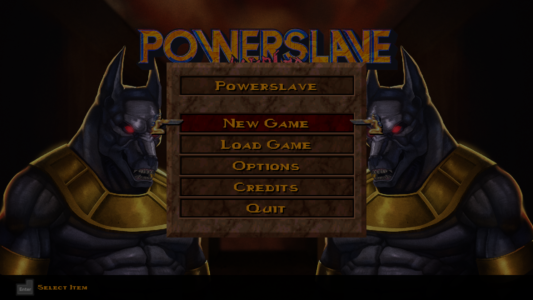
Hi all! Today we’re looking at Night Dive Studios’ remastered edition of a 90s first person shooter, Powerslave Exhumed.

classic PC gaming
October 26th, 2026
Written by: Stoo
Hi all! Today we’re looking at Night Dive Studios’ remastered edition of a 90s first person shooter, Powerslave Exhumed.
September 18th, 2026
Written by: Stoo
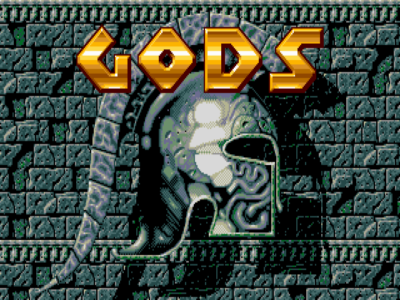
Hi all, I’m back. Hope you are all doing well. Today we’re going back to some early 90s platform gaming from the Bitmap Brothers with our review of Gods.
August 22nd, 2026
Written by: Rik
Hi all, hope you’re doing well.
[*Plug starts*]
If you’ve ever thought, ‘this guy really want to write a book about 90s sport’ while reading my reviews of old football and cricket games, then congratulations – you were correct, and I’ve now done just that.
This may also explain why I’ve been a little quiet on the FFG front over the last few months. (It turns out that writing a book is actually quite a lot of hard work, especially in the final stages.) But it’s out now, so you can expect to see me back here a little more often again.
As it’s about my teenage years, gaming does of course feature – cricket games in particular – and I did manage to squeeze in a mention of Wing Commander III and Half-Life. But I can’t pretend it’s not otherwise focused fairly firmly on the England cricket team in the 90s.
However, if you happen to be one of the site’s seven readers who likes sport, and have enjoyed some of my writing on the subject over the years, then it may be of interest. If you want to try before you buy, then there are a few supporting features on the accompanying Substack.
[*Plug ends*]
July 3rd, 2026
Written by: Stoo
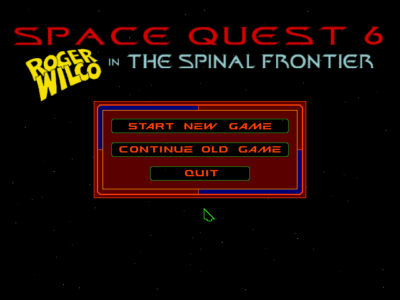
Hi all. Looks like I’m doing Sierra adventures this year! Our journey through Space Quest finally comes to an end with the sixth entry, Roger Wilco in the Spinal Frontier.
May 19th, 2026
Written by: Stoo
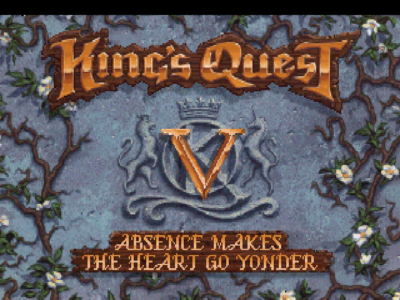
Hi everyone. I have all sorts of plans for reviews underway, including long overdue returns to the RPG and strategy sections. For today though we’re lookin at another Sierra adventure: King’s Quest V: Absence Makes the Heart Go Yonder!
April 11th, 2026
Written by: Rik
Hi everyone.
Today’s review is from the collection marked ‘Xbox 360-era games I meant to get around to one day’. As I’d already played the first one, I decided to pick out Star Wars: The Force Unleashed II.
Do we need a bit more hype? Er… is the Force strong with this one? Do they still use that for reviews of Star Wars games? [Probably – Ed.]
March 27th, 2026
Written by: Rik
Moments in Gaming is where we look back on gaming experiences that have left a particularly strong impression on us over the years: mainly for good reasons, but sometimes for bad ones.
I mentioned recently an unsuitability for playing ‘proper’ racing games, with modern simulation and sim-adjacent games being so effective at conveying a sense of danger that a nervous real-life driver might find themselves lacking the nerve to really hit the best lap times.
A couple of years ago I decided to fire up one of Codemasters’ Formula 1 titles that had accrued in my backlog without ever being touched, so that I may at least continue my long-running tradition of repeatedly practising the first race of a Grand Prix season before abandoning it forever.
But they’ve made these games better and more accessible to idiots like me, now, and so with some of the dummy-proof aids turned on, I made it through quite a few rounds with some success.
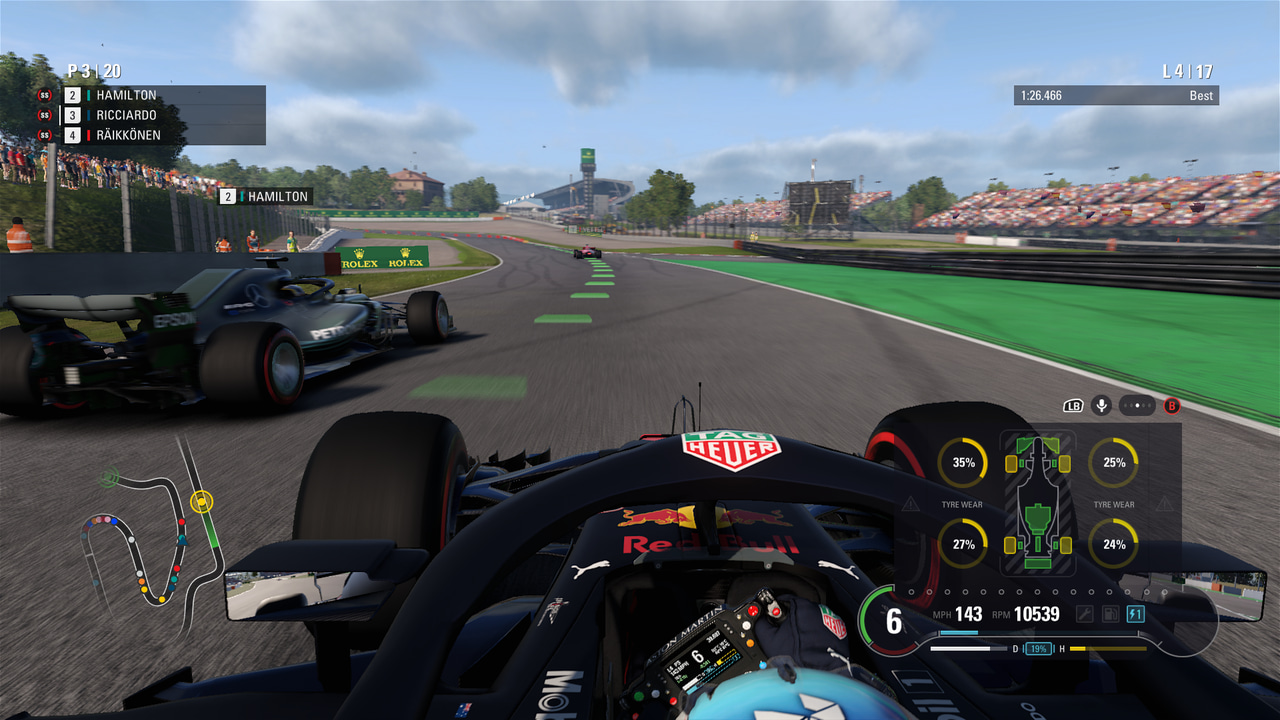
Note the helpful green arrows on the road.
Once the initial sense of pride and self-satisfaction subsided, however, it increasingly felt like a hollow experience. Without the aids turned on, I’d have no chance and give up, as I had before; but with them, I didn’t really feel as if I was participating in the ultimate racing competition. Or, to put it another way: I could never be a Formula 1 driver, so any game that makes me feel like I could is somehow fatally compromised.
As it turns out, F1 2018 eventually proved too difficult once I got to the street circuits like Singapore, where a slight misjudgement puts you into a wall, and I reverted to my habit of giving up as soon as it got tricky, while giving kudos to the game for still having that capacity, despite all its friendly assistance.
The feeling that you’re not in total control is, I think, what removes a sense of involvement. Strangely, arcade driving games have always been the ones that have made me feel like I’m racing closest to the edge, even if they’re so simple they can be played with the four cursor keys if needed.
4D Sports: Driving (or Stunts) was the first racer to ever make me care about timed challenges, and using the construction kit to build some kind of semi-impossible monstrosity before seeing who could complete it in the fastest possible time was a regular theme of a number of super-cool gaming get-togethers during the 90s.
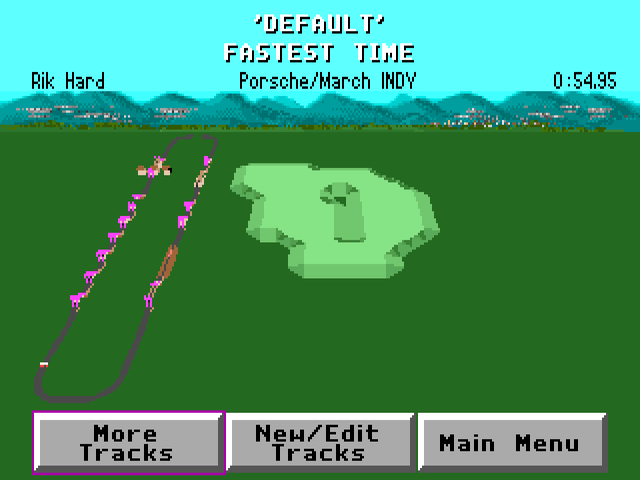
The track…
But the greatest personal obsession was ‘Default’ – the track which would load at the start of each new game, unless you changed it [So the ‘default’ one, then? – FFG Reader]. A strangely narrow loop with multiple jumps on either side, it seemed like a strange layout for a developer to choose, although a friend later claimed to be the author, replacing the original with his own design on a copy of the game that was later widely circulated through unofficial means.
It should be possible, with some digging, to find out if this is true or not, but really, I don’t want to know. The copy of Stunts that I have on my HD is the same one I had back in the 90s, transferred over across multiple PCs, and complete with saved tracks, lap times and even replays that my teenage self thought were worth saving. This is my reality: I’m going to leave the actual facts out of this.
At one point, ‘Default’ acted as a kind of personal Top Gear test track to validate the performance of the various cars available (a roster which at the time seemed massive, but upon further inspection apparently totalled a mere 11), and seeing what times could be achieved with each. (It was the 90s, ok? You sort of had to make your own fun.)
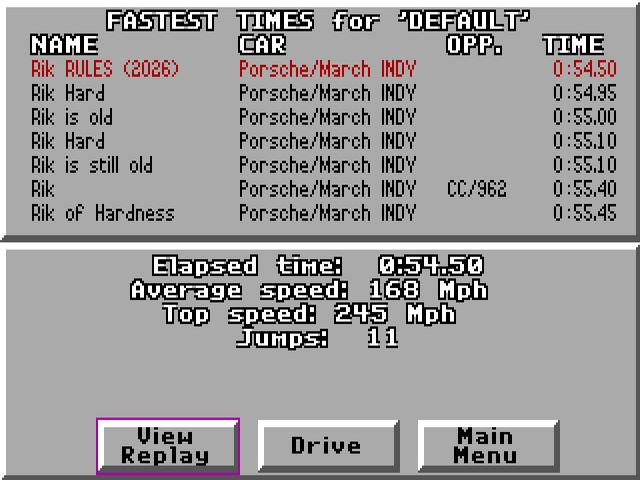
There was no doubt regarding what the best car was, though, and soon these tests morphed into more straightforward ‘what is the fastest possible time that you can do with the Porsche March Indy’ territory.
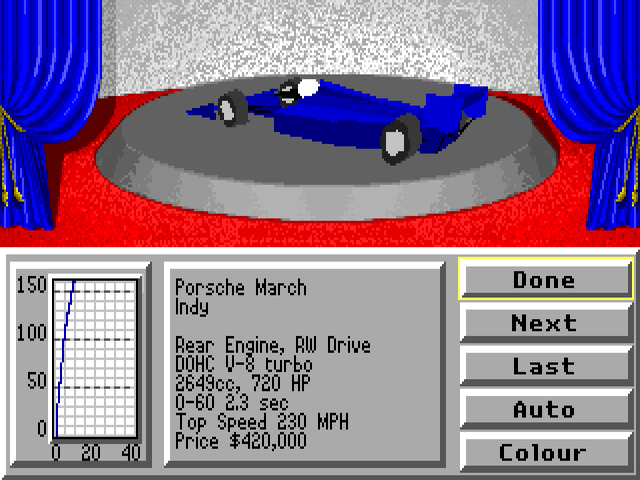
The car…
At first, times under a minute seemed tricky to achieve, before seconds and fragments of seconds were shaved off through frenzied sessions of repeated attempts at the same track in the same car.
Sometimes things would go wrong and you weren’t quite sure why: little quirks on the first set of jumps would mean occasionally you’d fly through the middle of an open bridge and smash into the base below, or encounter that bug where the front of the car would hit a ramp and propel you hundreds of miles straight up in the air.
But eventually the process was honed down to a fine art, with little details becoming crucial: move to the centre of the track as soon as possible; make sure you bring the revs down in the air as you’re flying towards that first turn; attack the corners but don’t spin out; if you’re not under X time by this point, then quit and start again.
The time…
Revisiting that same experience all these years later and trying to beat my old times, I was left with the feeling that, despite the rudimentary graphics, controls and handling, I was thinking more like an F1 driver than in any actual F1 game.
With complete confidence in my ability to do the basics, the instincts associated with real racing – concentration, fearlessness, ruthlessness, perfectionism – could come to the fore. Even if it was only in a daft old racer with bumblebee engine notes and reality-defying jumps, on a track that may or may not have been designed by a 14-year-old in the mid-90s.
February 27th, 2026
Written by: Stoo
Hello everyone! For today’s review we’re adding another game to our archive of Sierra adventures with Space Quest V: The Next Mutation.
February 22nd, 2026
Written by: Rik
Good afternoon!
Today’s review is of the racing game SHIFT 2: Unleashed.
Almost certainly, after 18 games, this will be the last Need for Speed (yes, this is a Need for Speed game) to be covered on FFG.
As long-term readers (if any exist) will be aware, we already have a Brief History summarising all of our coverage, but perhaps the moment deserves a few extra words at some point, too.
I’ll see what I can come up with!
February 14th, 2026
Written by: Rik
Hi there!
Today’s review is another modern(ish) indie adventure: Wadjet Eye’s post-apocalyptic point-and-clicker from 2016, Shardlight.
Next time I’m here, I’ll have something really exciting for you.
(Well, actually, not that exciting – don’t get your hopes up or anything.)

 Posts
Posts